
Understanding Text Embeddings: From Words to Documents with Applications and Code
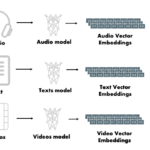
In the era of machine learning and natural language processing (NLP), it’s essential to convert human language into a format that machines can understand. Embeddings are a powerful technique for transforming text—whether words, sentences, or entire documents—into dense vector representations that preserve semantic meaning. This article explores different types of embeddings, their real-world applications, and how they form the…


Loading

Read More

GUI Options in implementation of Neural Networks

GUI in Neural Networks

When it comes to implementing neural networks using TensorFlow, there are several options available, including both command-line interfaces (CLIs) and graphical user interfaces (GUIs). Let’s explore some of the most popular ones: Remember that while GUIs can be helpful for visualization and exploration, understanding the underlying code and concepts is essential for building robust neural networks. Choose the approach…

3453

Read More

Neural Networks – Basics

Neural Networks

Neural networks have many applications in artificial intelligence, including image and speech recognition, natural language processing, recommendation systems, and autonomous vehicles. They are particularly useful for tasks that involve complex patterns, such as recognizing objects in images or understanding natural language.

Read More

Introduction to Machine Learning – A Primer

The fog of ambiguity around AI is stifling both individual and organizational growth. A lack of clarity is the chokehold on AI progress.

Data is their fuel, AI their rocket ship, but their compass spins wildly.
The data gold rush is on, but only those with a map will strike it rich in AI.

Read More

Beyond the Line: How Activation Functions Unlock Complex Learning in Neural Networks

Here are some of the most famous activation functions used in neural networks, along with their advantages and disadvantages: 1. Sigmoid Function: Output: Ranges between 0 and 1 (squashes the input values between 0 and 1). Advantages: Smooth output, making it suitable for modeling probabilities (often used in output layer for binary classification). Well-behaved gradients for backpropagation (a technique…

34254

Read More

What is Keras and why is it called so.

Keras is not a complete neural network framework itself, but rather an API (Application Programming Interface) built on top of existing frameworks like TensorFlow. It provides a user-friendly layer on top of the complex computations involved in building and training neural networks.

Keras is a high-level neural network API written in Python that runs on top of TensorFlow, CNTK, or Theano. It allows users to quickly build and experiment with deep neural network models. Keras is known for its simplicity, flexibility, and ease of use, making it a popular choice among researchers and developers. The name “Keras” comes from the Greek…

Read More